Showing posts with label lord vishnu. Show all posts

Nanjundeshwara Temple / Srikanteshwara Temple - Nanjangud

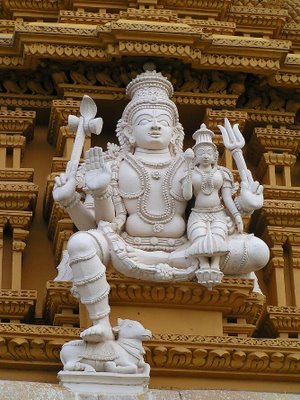
Nanjangud -close to Mysore - is famous for its Nanjundeshwara (Shiva) temple. A 1000+ year old temple from the days of Ganga's. And seems to have had major royal patronage all through. It reflects in the grandeur of the temple, exquisite sculpture, two big wooden chariots, and idols of numerous kings & queens.

This Nanjangud temple is dedicated to Nanjundeshwara or Srikanteshwara, who is Lord Shiva and He is called so as Lord Shiva swallowed the poison which originated while Great Churning of the Ocean. The temple had been under frequent expansion in phases and contributions from different rulers of the region for about 10 centuries by Gangas, Cholas, Hoysalas, Krishnadevaraya, Dalavoys and Wodeyaras from 9th century to 19th century.  When Tippu Sultan's Royal elephant had lost its eyesight, he worshiped Lord Nanjundeshwara and had faith in Him. The eyesight of the elephant got recovered and Lord Nanjundeshwara was called as "Hakim Nanjundeshwara" by Tippu Sultan. Tippu Sultan then donated a Shiva Lingam made of jade (precious green stone) along with an emerald necklace to the temple. Hakim means doctor, Lord Nanjundeshwara is also called as "Vaidya Nanjundeshwara" and is even today said to be a healer for his devotees.

This temple is situated on right banks of Kapila (Kabini) River and is one of the oldest temples in India. The Shiva Linga in the temple is believed to be installed by the sage Gauthama who had stayed here for some time. This Shiva Linga was also worshiped by Parashurama when he had stayed for some time in this town on his journey to get cleansed from the sin of beheading his mother.

A major event in the pilgrim town is the Rathotsava or the Chariot festival of Nanjundeshwara held twice every year, locally known as Dodda Jathre and Chikka Jathre. Idols of Lord Nanjundeshwara, Goddess Parvathi, Lord Ganapathi, Lord Subramanya and Lord Chandikeshwara are kept in five separate chariots and a traditional puja's are performed to the idols early in the morning on the day of Jathre. After the puja chariots are flagged off. Thousands of devotees pull the Chariots carved in the wood, through the streets of the old city.

Nanjangud Temple Timings:

Morning: 6am to 1pm
Evening: 4pm to 8pm.
Temple will be open from
Morning 6am to Evening 8pm
on Special Days and Mondays. 


Dakshina Pandaripuram, Govindapuram

With the divine benedictions of Sri Pandurangan and Sri Rukmini Devi, with the Guru Krupa of Dakshina Halasyam Sri Gnanananda Giri Peetadhipathi Sri Haridhos Giri Swamigal and with the blessings of Paranur Mahathma Sri Sri Krishna Premi Swamigal, Sri Vittal Rukmini Samsthan (formerly known as Sri Panduranga Bhajanashram), Govindapuram has embarked upon the holy project of constructing a first ever Maharashtrian style temple in typical Hemandapanthi for Sri Rukmini sametha Sri Vittal at Govindapuram near Kumbakonam in Tamil Nadu. Once completed, this upcoming Temple will be the Biggest & Tallest Temple for Lord Sri Vittal and Rukmini Devi in the entire World.

Sri Vittal Rukmini Samsthan is headed by Brahmashri Vittaldas Jayakrishna Deekshithar, the grand son of Sengalipuram Brahmashri Anantharama Deekshithar and Brahmashri Narayana Deekshithar. Sri Vittaldas is also the most blessed disciple of Dakshina Halasyam Gnananandagiri Peetadhipathi Sri Haridhos Giri Swamigal (Guruji) and Paranur Mahathma Bramhashri Krishna Premi Swamigal (Sri Sri Anna). Govindapuram is such a holy land where the great Jeeva Samadhi of Sri Bhagavan Nama Bodendra Saraswathi Swamigal, the 59th Peetadhipathi of Sri Kanchi Kamakoti Peetam is present. Sri Vittal Rukmini Mandir is being constructed in Sri Vittal Rukmini Samsthan’s premise which is about a kilometer away from Sri Bhagavan Nama Bodhendral’s Adhishtaanam at Govindapuram. You may please visit www.vittaldas.com for more information about Sri Vittaldas Maharaj, Sri Vittal Rukmini Samsthan and its activities.

More Info at :
http://www.thiruvidaimarudur.com/Pandaripuram_Govindapuram.php
http://www.vittaldas.com
http://www.templeinfo.info/2011/06/dakshina-pandaripuram-govindapuram/

Pandaripuram – Sri Pandarinathar and Sri Rukmini Devi

Pandaripuram Sri PandarinatharPandarpur or Pandaripuram is on the banks of the river Chandrabaga in Maharashtra and is at a distance of 75 km from
Pandaripuram Sri Pandarinathar

Sholapur. The heart of Pandarpur is this ancient temple which is visited by thousand of devotees every day. The queue for darshan starts right from the river bed which is about 500 meters away and passes thro’ a foot bridge and a multi-storied queue complex before it reaches the temple. There is also another entrance for this temple for ‘Mukha seva’ a fast one by which one can have a quick darshan of the Lord at a distance of some 20 feet. Closed circuit TVs are installed to capture the pujas offered to the deities.

Pandaripuram Pandurangan temple preaches the importance of parents, the foremost among the conducts to be adopted by each and every citizen of this land, namely patronizing one’s parents in their old age.
Thayar’s name is Rughumayee or Rukumanibhai. There are separate sanathis for the Lord and his consort and they are seen in standing position with hands on their hips, which posture is like, they are enjoying the bhajans of the devotees.

In previous times, this location (where now Pandaripuram is found) is known as “Thandiravanam”. There was a large forest area, close to this place is found and an aged couples named Muthabhai and Sanadevan led their life there. They had a beautiful child by named “Pundareegan” and he had a great love towards his parents. Since, Indiran killed an Asuran, Virutharasuran, he was given a sabham that he would become a brick / stone because of his sin and as a stone, he was thrown in front of the house of Pundaleegan. Sri Krishnar wanted to test the love and affection of Pundareegan.
Routes and Distance :
While traveling from Chennai, one has to travel from Chennai in Mumbai Express from a junction by named Kurdhuvadi, a narrow gauge train will lead us to Pandaripuram.
So, one has to get down in Kurdhuvadi and from there we can reach Pandaripuram. Even we can reach this sthalam from Mokkol railway station and from there, this sthalam is reachable at 40 Kms away.
Distances between Pandaripuram and various major cities / towns.
1. Nagpur to Pandaripuram – Around 768 Km.
2. Delhi to Pandaripuram – 1580 Km.
3. Bangalore to Pandaripuram – 750 Km
4. Kolapur to Pandaripuram – 75 Km
5. Coimbatore to Pandaripuram – 1110 Km. 

* 2 Kms away from Pandaripuram there is a place named “Gopalpur”, where a Vishnu Paadham (divine feet) of Sri Vishnu is found. 

* There is another great specialty in this sthalam and it is the way we worship the Perumal. They adapt as process called “Padha Sparisa Seva” and it is that we can place our fore head touching the divine feet of the Perumal in Garbagriham (Moolavar Sannadhi). And, it is considered as a special one if we do it on Wednesdays. 

Jai Jai Vittala, Panduranga Vittala

Parthasarathy Temple

Parthasarathy Temple, Visit Parthasarathy Temple of Tamilnadu, Temple tour of Parthasarathy Temple, Religious placeParthasarathy Temple situated at Triplicane is one of the two famous and ancient shrines in Chennai. The temple is said to have existed 1200 years ago. Triplicane is also known as "Thiruvallikeni", one of the 108 Divya Desams, renovated by a king of Pallava Dynasty. "Brindaranya" is the traditional Puranic name of Thiruvallikeni. While dedicated to Vishnu in his incarnation as Krishna, the Parthasarathy Temple at Triplicane enshrines images of the five incarnations of Vishnu including that of a wounded Krishna.

The deity is called "Parthasarathy", as he was the charioteer (sarathy) for Arjuna (Parththan) during the great Kurukshetra war described in the Mahabarata (also spelt as Mahabharatha) epic. Lord Krishna undertook not to take part in the war but agreed to be the charioteer to Arjuna. Bhishma, from the opposing side in order to break Krishna's undertaking, shot arrows at his face. Devotees believe that the marks on the face of the idol in this temple are the wounds sustained in that war. Krishna after the war came here to rest next to a beautiful pond full of 'Alli' flowers thus giving this place the Tamil name 'Thiru-alli-kerny'.

The temple is referred to in the ancient Vaishnavite works of the Alwar saints. The temple covers an area of 1.5 acres and one can see the inscriptions, which date back to 8th century Pallavas (Tondaiman Chakravarti). A number of fine carvings adorn the temple. The present structure of the temple is largely based on the renovations and additions carried out in the 16th century.

The Vijayanagar rulers made several endowments to the temple. The gold image of Tirumaal Nachiyaar, adorning the chest of Venkatakrishnar is a rare work of art. This shrine is considered equivalent to Tirupati.

In the temple complex there are shrines dedicated to Sri Ranganatha, Venkatakrishnaswamy, Sri Rama with his brothers and his consort Sita, and Sri Andal. Sri Hanumar can be seen facing the shrine of Sri Rama. The Azhwars and Archaryas of the Vaishnavite tradition are given pride of place in this temple.

The Deity
The Lord's name here is "Venkatakrishnan". Sri Parthasarathy in the sanctum sanctorum is in a standing posture facing east holding in his right hand and the divine conch called the "Panchajanyam"(He dosen't hold the usual chakra called Sudharshana here). His left hand is in Dana Mudra indicating His Divine feet.

He is seen with his consort Rukmani on his right and his brother Sri Balaraman on his left along with his younger brother Sadyagi, his son Pratumnan and his grandson Aniruthan. It is a rare sight to see the divine Lord with the members of His family. It is believed that Venkateswara of Tirupati manifested himself as Parthasarathy here and hence the name Venkatakrishnan.

Festivities
The important festivals conducted here are the Brahmotsavam in the month of Chithirai (April/May), Thiruaadipooram held for 10 days in the month of Aadi (July/August), and in the month of Markazhi (December-January) the festival called Neerattu Utsavam culminating with Thirukkalyanam.

Lord Veeraraghava Temple (Tiruvallur)


Lord Veeraraghava Temple, Visit Lord Veeraraghava Temple of Tamilnadu, Temple tour of Lord Veeraraghava TempleTiruvallar is glorified by the location of a famous Vaishnavite temple dedicated to Sri Veeraraghava Swami. The deity of Veera-raghava is Lord Vishnu lying on Adi Sesa, with Lord Brahma coming out from his navel. The Goddess is known as "Kanakavalli" or "Vasumati".

The temple has a huge intricately carved Gopuram. It is a marvelous sight to see the glorious specimens of Dravidian art in sculptures depicting the mythological legends of Hindu scriptures in the pinnacles of the Gopurams. It is believed that Lord Vishnu killed the demons Madhu and Kaitabha here at Veeksharanya Kshetram.

Tiruvallur was also known as "Bhikshwaranyam" (the forest where sages lived on alms) in ages gone by. During January 1960, Kumbhabhishekam was performed in this temple after all the Gopurams were renovated and repainted.

The legend connected with the origin of this temple shows that once upon a time, in Krita Yuga, a sage by name Purupunyar lived with his wife Satyavati in Badarikashram. They had no children. Purupanyar performed a Sali Yajna (Putrakameshti Yaga) with great fervor and devotion. The sage offered 1,000 'Ahutis' (oblations of ghee to the sacrificial fire after chanting the mantra each time) every day, for one full year. On the last day, when Purnahuti (the final offering) was performed, Lord Narayana was pleased with the austerity of the ritualistic observances of the sage, and appeared in the sacrificial fire in a blissful mood to offer boons. The sage prayed for a noble son.

The boon was granted with the condition that he should be named after the name of the Yajna as Salihotran. With this blessing, Lord Narayana disappeared. Then the sage collected the ash strewn around the Yajna Peetha and gave a handful of it to his consort to take in with great veneration as Prasadam.

In the tenth month after that, a glorious son was born to Sage Purupunyar. The child was named Salihotran as ordained by Lord Narayana. With the growth of years, the child showed signs of precocity and started on a pilgrimage-visiting temple after temple. On Pushya Amavasya day (New Moon day in January-February), he reached Tiruvallur where he found that Lord Brahma, other Devas and great sages like Vasishtha, were engaged in taking bath in the Hrittapanasini tank.

Next year, on the same Pushya Amavasya day, he completed one year of penance and took a holy bath in the Hrittapanasini tank and observed his morning prayers. As he was fasting for one year without food or drink, he collected on that day some paddy and prepared prasadam out of that. He divided it into three parts; the first part was offered to Lord Narayana. The second part was kept for offering as charity and the third for his own consumption.

At this juncture, Lord Narayana took the form of an old Brahmin and came the way where Salihotran was waiting to offer the share to a guest. When Salihotran saw the old Brahmin, he immediately requested him to grace his hermitage. He respectfully offered to the Brahmin the prasadam meant for the guest. Quickly the Brahmin ate up the offering and Salihotran felt from his facial appearance that he was not satisfied.

On inquiry, he learnt that the old Brahmin had had no food for the last 4 or 5 days and his hunger was not fully satisfied. At this, the second portion that he kept for himself was offered to the guest. The guest was satisfied and left the place. Salihotran commenced another year's penance without food and drink. Again, on the day of Pushya Amavasya at its close, he took his holy bath in the tank and noticed many unusual good omens on his way. After finishing his morning rituals, he procured some paddy and prepared oblations. Like the previous year, he offered a portion to Lord Narayana and was waiting for a guest to offer the second portion, leaving the last portion for him.

This time also, Lord Narayana took the form of an old Brahmin and was coming by that way. Salihotran-welcomed him and while accompanying him to the hermitage, the old Brahmin expressed that he was feeling extremely hungry and thirsty and needed a place for rest also. In the hermitage, Salihotran offered the entire prasadam meant for the guest as well as for himself. The old Brahmin was greatly pleased and asked Salihotran, for a place to lie down. Salihotran arranged for a bed too.

Later that night Salihotran saw a beautiful princess passing by his hermitage. The prince was so charmed by the beauty of the princess that he voluntarily expressed that he, a prince was on the lookout for a bride. The princess advised the prince to go and worship Lord Veeraraghava in the temple situated on the northern bank of Hrittapanasini tank, if he wanted to marry her.

But the prince did not move, but argued that if the mutual love was real, God Himself would come down to approve of it. The princess then sent for her parents. Arriving there, they enquired about the prince's lineage but the prince would not divulge his identity.

However, he swore by Lord Veeraraghava that after his marriage with the princess, he would stay there. This being a very sound proposal, the marriage was fixed; and performed. Following the traditional custom of offering prayer at the temple after marriage, by the newly wedded couple, the prince and princess, accompanied by the parents and the invited guests, went to the temple of Lord Veeraraghava.

When they approached the sanctum sanctorum, to the utter amazement of all present, the newly married couple merged into the deity and stood transformed as Lord Veeraraghava, and his divine consort Kanakavalli, who blissfully blessed the parents and the assembly to attain salvation after their preordained, stay in the world.

Lord Varaha Temple (Tiruvadantai)


Lord Varaha Temple, Visit Lord Varaha Temple of Tamilnadu, Temple tour of Lord Varaha Temple, Religious place of TamilnaduMythologically, the third incarnation of Vishnu was in the form of Varaha, the Boar. There are a number of temples dedicated to Lord Vishnu in the aspect of this incarnation. One of such famous temples is at Tiruvadantai, 27 miles from Chennai towards south on the way to Mahabalipuram.

The main deity is 3m (9 ft) tall and is called "Sri Lakshmi Adi Varaha". He is also known as "Sri Nritya Kalyana Perumal'. The Lord holds a conch in his upraised right hand and the disc in his left. The name of the Goddess is "Akhilavalli Ammal". The Goddess is seated over the left thigh of Lord Vishnu in his Varaha aspect, His left hand encircling Her waist, while Her feet are held in His lower right hand palm. Only the right leg of Varahaswami is touching the floor.

The deity is decorated with a garland formed of 108 saligrams around the neck. The legend goes that one Hariseka Maharaj, the ruling chief of Mahabalipuram, possessed this garland originally. He was a great devotee of Adi Varahaswami and it was his daily routine to visit the temple and pay homage. When he became old and was physically unable to move, he presented the garland to the presiding deity.

There are four Utsavamurtis (processional deities), namely, Nitya - kalyanaswami, Kottukar, Palpo Perumal and Spathanaperam. On festive occasions the processional deities are taken around the temple.

Once upon a time there lived a sage named Kalava at Tiruvadantai. He had 360 daughters. Tiruvadantai was a great city in those days and had 360 Agraharam (streets where Brahmins lived). As the sage was greatly honoured and respected, one daughter was taken up by each of the 360 streets to be respectfully maintained and looked after. Time rolled on. In due course, when the girls came of age it became a great anxiety for the sage how to get them married suitably. Praying fervently, the sage resigned himself to God.

Lord Varaha Temple, Visit Lord Varaha Temple of Tamilnadu, Temple tour of Lord Varaha Temple, Religious place of Tamilnadu
Lord Vishnu elected to take the form of a 'Brahmachari' (bachelor) and appeared in the first Agraharam and broached the subject of marriage with the first daughter and then married her. It is customary with newly married Hindu couples to visit the village temple and pay their homage to the presiding deity and receive blessings for their future life. When the Brahmachari visited the local Varahaswami temple with his newly - wedded wife, he and his wife both mysteriously vanished in the sanctum sanctorum.

On the second day, Vishnu again took the form of another Brahmachari and proposed marriage with the second daughter in the second Agraharam and married her too. After marriage when the couple visited the local temple they too disappeared. Likewisely, mysteriously, a new Brahmachari used to be performed with one of Kalava Maehashi's 360 daughters. And when the newly married couples visited the Varahaswami temple, they just vanished.

When all the 360 girls vanished in this manner, the episode reached Maharshi Kalava. He was bewildered and agitated and wanted to know from God Himself the whereabouts of his daughters and sons-in-law.


Lord Varaha Temple, Visit Lord Varaha Temple of Tamilnadu, Temple tour of Lord Varaha Temple, Religious place of Tamilnadu
When the Sage entered the, sanctum sanctorum of the temple with the object of knowing from the Lord's mouth the where abouts of his daughters, Lord Vishnu appeared before him as Varaha, the Boar, holding all the 360 daughters on lap. Lord Varahaswami embraced all the 360 daughters of Maharshi with his left hand and pressed all the 360 souls into single soul of Lakshmi, His consort, making her sit on his raised thigh. The merging of the souls of his daughters with that of Goddess Lakshmi enlightened the Sage.

The sage was greatly elated that Goddess Lakshmi considered him fit enough to be her father. As the marriage episode continued day after day for the 360 days of the year, the presiding deity was fondly named "Nityakalyanaswami" (Nitya means daily, Kalyana means marriage). Gradually the place gained in importance.

Trikakkarai (Tirukkaatkarai)

Description: The Vamanamurthy Temple at Trikakkara is an ancient one, located 14 km north east of Irinjalakuda on the Thrissur Ernakulam railroad. It has been glorified by the tamil hymns (Tiruvaimozhi) of Nammalwar, of the 1st millennium CE.

This temple is associated with the Onam festival; Tiruvonam is celebrated in the Malayalam month of Chingam (Leo), the last day Onam marking the avataram of Vamana and the banishment of Mahabali Chakravarti to the netherworld. Onam is the most important festival celebrated in Kerala. Even today, an image of Trikkakkara Vamana is symbolically used in Onam celebrations in several places in Kerala.

This temple celebrates the legend of the origin of Vamana - Trivikrama and his conquest of the worlds with his massive Trivikrama form and his placing his foot on Mahabali Chakravarti's head. Local legends even associate the Kapila theertham with the source of water with which Mahabali Chakravarti symbolically made his offering of land to Vamana.

Legend has it that Mahabali returns to the earth once a year during the Onam festival and that his return is marked by celebrations involving floral decorations and more.

There are interesting non-puranic local legends surrounding this place. A devout farmer, appalled by the lack of crop from his fields of plantain trees, worshipped the deity here, with an offering of a bunch of plantains fashioned out of gold, upon which, he was blessed with a more than bountiful harvest of a breed of bananas now known as Nendiram Pazham.f

An extension to this legend has it that a yogi was accused unjustly of stealing these golden plantains; acquitted later after undue punishment, the yogi cursed the place to befall into ruins. The legend states that the yogi, thanks to his untimeley death caused by the undue punishment and humiliation turned into a bhramharakshasan and that a shrine was built to propitate his spirit. The region went through wars and conquests and suffered poverty, apparently due to the yogi's curse. It was only later that the administration of the temple was taken over by the Travancore kingdom and the temple began to see better times.

Deities: The presiding deity here is Vamanamurthy. There are subshrines to Sastha and Mahalakshmi. This temple is characterized by its vritta (circular) vimanam. A Shivalingam in the temple is said to have been held in worship by Mahabali Chakravarti. There are inscriptions here from as early as the 10th century CE the period of Bhaskara Ravivarma. This temple is said to have received endowments from the Chera king Kulasekhara Perumaal of the 9th century CE.

Tiruvallavaazh

Description This is an ancient temple, enshrining Sri Vallabha at Tiruvalla near Kottayam. It has been glorified by the tamil hymns of Tirumangaialwar and Nammalwar of the 1st millennium CE. The name Tiruvalla originates from the presiding deity Vallabha.

Tiruvalla is an ancient town with a hoary past. It has been referenced in 7th century sanskrit literature of Dandin the sanskrit poet of Kanchi. The Tiruvalla plates contain inscriptions regarding the administration of the temple in ancient times.

The temple: The plinth and the wall of this temple are of granite while the rest of the structure is of timber and sheet roof. The shrine has a vritta (circular) vimanam. Carvings of Dakshinamurthy and Shiva - Yogiswara are seen in this temple. In front of the sanctum are a namaskaramandapam, a mukhamandapam a gopuradwaram and an agramandapam. There is a subshrine to Vishwaksena, in the north east corner of the inner prakaram, facing south.

Vallabha is portrayed as bearing a conch, a discus and a lotus.

The Sudarshana Chakram seen through the west cardinal door of the sanctum is held in worship and is believed to have been installed in the 13th century. Much of the present form of the temple dates back to the 14th century.

Sandalwood paste is offered as the prasadam in the Vallabha shrine, while vibhooti or the sacred ash is offered as prasadam in the Chakra sign on the other side of the sanctum.

The flagstaff of this temple is a monolithic structure of black granite 50 feet in height. At the top of this staff is an image of Garuda.

Interestingly, devotees offer to sponsor kathakali performances as their offering to the temple. Those whose prayers are answered offer to have a performance arranged here, as a token of acknowledgement and as a gesture of support of the arts.

Festivals: A one day festival is conducted in the month of May when images of deities (Bhagawati) from the Kavil, Padappaad and Alamthurathu temples are brought in decorated palanquins to this temple and brought in through the northern entrance of the temple in great splendor and are given offerings of new clothes and the likes prior to their return to their respective temples. It is only on this day that the northern entrance is opened.

Tiruvilvamala

Tiruvilvamala, located north of Thrissur in Kerala houses the twin temple complex atop the Vilvadri hill, dedicated to Rama and Lakshmana. As in the case of Triprayar, Moozhikkalam, Irinjalakuda and Payyamel, the images held in reverence here are those of Maha Vishnu, worshipped as Rama and Lakshmana respectively.

The name Vilvamala or Vilvadri arises from the belief that there is a subterranean chamber beneath the temple housing a golden vilva tree.

The Bharatapuzha river: About half a mile north of Tiruvilvamala is the Bharatapuzha river, considered to be the Ganges of Kerala. Tiruvilvamala, Tirunaavai, Tiruvituvakkode, Tirthala and Tiruchikuzhi are five of the shrines along the course of the river. It is believed that Tiruvilvamala is to the Bharatapuzha river what the Manikarnika ghat in Benares is to the Ganges.

To the east of the Tiruvilvamala temple is a cave, known as the Punarjanani. It is believed that trekking through this cave would end one's cycle of births and deaths. It is only on the Ekadasi day in the month of Scorpio that this pilgrimage is undertaken.

Architecture: The temple complex consists of two sancta with pyramidal two tiered copper plated roofs with gables. There is no flagstaff here as in Triprayar. The entire temple complex has ornamental gopuradwaras or entry tower - bases, without the towers.

It is believed that the towers that existed here used to be lit at night and that the lighted towers used to be visible from as far away as Tirunaavai, and that the towers were struck down by lightning.

The two shrines house images of Mahavishnu. The west facing sanctum houses a five feet tall gold plated image of chaturbhuja Vishnu. The gold kavacam covers what is believed to be a svayamvyakta (self created) image. The gold covering is never removed.

The east facing shrine houses a three feet tall stone image of Mahavishnu and is decorated with fine jewelry and garlands.

While the west facing image is worshipped as Rama, the east facing image which is believed to be older is worshipped as Lakshmana.

Also in this temple are shrines to Ganapati and Saasta.

The current structure is largely a result of renovations carried out by the rulers of Cochin in late 19th century after a devastating fire destroyed much of the temple. Prior to it it had been renovated in mid ninteenth century, and prior to it it had been attacked by the armies of Tippu Sultan in the 18th century.

Legends: The east facing image (Lakshmana) is believed to be an image of Vishnu held in worship by Shiva. It is said to have been granted to Parasurama (yet another incarnation of Vishnu) who is said to have established the image here and initiated a worship protocol.

The west facing image is said to have been installed by a sage by name Aamalaka who with intense fervor prayed to Vishnu and requested that he take up abode on the Vilvadri hill.

Festivals: The annual festival here falls on the Ekadasi day in the month of Pisces (February - March).

Alwar Tirunagari (Tirukkurukoor)

df097.jpg (9057 bytes)

Description This is the ninth and the most celebrated of the nine Nava Tiruppatis in Tirunelveli district in the belt between Tirunelveli and the coastal shrine of Tiruchendur.

Only Nammalwar, who resided at Alwar Tirunagari, has sung of these nine shrines Tiruvaikuntham, Varagunamangai, Pulinkudi, Tolaivillimangalam, Tirukkulandai, Tirukkolur, Tirupperai and Tirukkurugoor collectively referred to as Alwar Navatiruppati. Tolaivillimangalam referred to as Irattai Tirupati, counts as two in the scheme of Nava Tirupatis, but as one of the 108 Divya Desams.

Nammalwar honors Tirukkurukoor with a decad of 11 verses. Nammalwar's signature in each of his decads is Kurukoor Sadagopan. This shrine is very closely associated with Nammalwar, who lived his life here. Alwar Tirunagari is also known for Araiyar Sevai, where the Divya Prabanda Pasurams (verses) are recited with expression, music and rhythm as in Srirangam and Srivilliputtur.

Deities: The Moolavar here is Aadi Naathan or Aadi Piraan. Taayaars here are Aadi Natha Valli and Kurukoor Valli. There is a shrine to Nammalwar. The tamarind tree, in which he resided (Tiruppulialwar) is the stala vriksham here The name Alwar tirunagari is attributed to Nammalwar's presence.

Legend has it that Indra was absolved of his curse here. It is believed that Lakshmana incarnated as the tamarind tree here. Vishnu is believed to have been under a vow of celibacy, when Lakshmi meditated upon him to marry him and therefore Vishnu took her in the form of a garland of flowers (magizha malar maalai). There is another legend that Agasthyar had been blessed by Shiva, that there would be born a saint (Nammalwar) in this area, who would enthrone the language tamil to a status equal to that of sanskrit.

The temple: This temple covers an area of 5 acres and has three prakarams and a 5 tiered rajagopuram. The Tirumanjana Mandapam, the tirumamani mandapam and the Kannadi Mandapam are of great beauty. There are shrines to Rama, Venugopala, Narasimhar, Varaha here. This temple boasts of a nadaswaram made of stone.

This temple is regarded as the Budhastalam (mercury) and being the ninth Divyadesam in the Tirunelveli area, it is regarded as Parama padam itself.

Festivals: The asterism of each Alwar is celebrated here, as in Srirangam. Garuda Sevai in the tamil month of Vaikasi (Vishaka asterism - the birthday of Nammalwar) witnesses the grand Garuda Sevai, where festival images from all of the nine Nava Tirupatis congregate here. Nammalwar is mounted on the Hamsavahanam. The Paasurams on each of these deities are recited then, during this grand festival. The image above is that of Perumaal from Tirupperai.

Tirukkarambanur - Uttamar Koyil

p5&6.jpg (16922 bytes)


Description: Tirukkarambanur is located in Uttamar Koyil - also known as Bhikshaandaar Koyil , a village located on the railroad between Tiruchirappalli and Villuppuram. This is a unique temple in that it has shrines dedicated to Vishnu and his consort Lakshmi, Bhrahma and Saraswati, Shiva and Parvati.

This shrine is also known as Nepakshetram or Adimapuram. Tirumangai Alwar refers to 'Karambanur Uthaman' in a lone verse, where he states that Uthaman of Karambanur, Perumal of Kurunkudi and Tiruttankaal, are none other than Ranganathar of Srirangam - in a decad of verses praising Srirangam. It is believed Tirumangaialwar lived here, supervising the renovation of the Srirangam temple.

Deities: There are shrines here to all three of the trinity of deities revered in the Indian system of beliefs, namely Shiva and his consort Vadivudaiamman, Bhrama and his consort Saraswati, Vishnu and his consort (Purushottaman and Poornavalli).

Shiva is worshipped in the form of Bhikshatanar. Legend has it that the fifth head of Bhrama, which was pulled out by Shiva, stuck to his palms; and it was only after his receiving alms from Mahalakshmi, that it came unstuck. The same legend is held at the Tirukkandiyur Divyadesam (where the presiding deity is known by the name Hara Saapa Vimochana Perumaal), adjacent to the Tirukkandiyur Veerattastalam of Shiva and at Tirukkurunkudi near Nanguneri - Tirunelveli. This temple also popularly goes by the name Bhikshantar koyil.

Bhrahma is regarded as a Guru - or teacher, and hence offering worship on thursdays is considered significant.

Another legend has it that Vishnu took the form of a Kadamba tree to which Bhrahma offered worship, offering water from his kamandalam. Legend also has it that Kadamba muni offered worship to Vishnu on the banks of the Kadamba theertham created by Bhrahma.

The Temple: Shiva's shrine is situated south of Vishnu's shrine, facing west. There is also a shrine to Dasaratha Lingam and Soundara Parvati. There are also shrines to , Andal, Varadarajaperumaal, Venugopalan, Rama, Vinayakar, Natarajar, Subramaniyar, Saneeswaran and Anjaneyar. The Bhikshatanar form of Shiva here is considered to be of great significance. Sanakar, Sanandanar and Sanatkumarar, as well as Kadamba Muni are believed to have worshipped the Trinity Bhrama, Vishnu and Shiva here here. Inscriptions from the period of the Cholas and Pandyas are seen here.

Festivals: The annual Bhramotsavam of Perumaal is conducted in the month of Chittirai, while that for Shiva is conducted in the month of Vaikasi The Maasi festival of the Tiruvarangam temple witnesses a procession of Ranganathar to the Kadamba theertham at this temple.

Tiruvarangam (Koyil)

Description: This is the foremost of the 108 shrines glorified by the Alwars; all of the Alwars with the exception of Madhurakavi Alwar have sung of its glory. It is the one of the greatest centers of the Sri Vaishnava religion and among the most visited pilgrimage centers in India.

Undoubtedly the largest temple in India, and one among the grandest, it is a treasure house of art freezing various architectural styles over a period of time. It boasts of the tallest temple tower in India. Referred to as heaven on earth it is an ancient center of worship - vibrant with tradition and festivals. The Pancharanga Kshetrams along the course of the Kaveri are Srirangapatnam (Karnataka), Srirangam, Koyiladi (Anbil) and Kumbhakonam and Indalur (Mayiladuturai).

Srirangam is very closely associated with Ramanujacharya, the beacon of the Sri Vaishnava tradition of Hinduism. Tiruvanaikka or Jambukeswaram, one of the Pancha Bhoota Stalams (associated with the primary element water) of Shiva, is located in the vicinity. Srirangam is located near Tiruchirappalli in Tamilnadu.

Deities: Ranganathar is enshrined in a reclining posture (facing the South); while Namperumaal the festival deity in a standing posture is also housed in the main sanctum. There is a shrine in the fourth prakaram, housing Ranganayaki Taayaar.

Traditions: Araiyar Sevai, one of the ancient devotional art traditions of Tamilnadu, involving the expressive recitation of the Divya Prabandams, using movement, music originated here under the auspices of Nadamuni (10th century CE). Araiyar sevai is performed also at Srivilliputtur, Alwar Tirunagari and Melkote (Karnataka). The famous tamil literary work Kamba Ramayanam premiered here at Srirangam.

The Temple: This temple enshrines Ranganathar in the central sanctum, crowned with a gold plated Pranava Vimanam or Paravasudeva Vimanam. A total of 7 concentric prakarams surround this shrine, housing several mandapams, tanks and shrines. The area enclosed by the outermost wall is over a hundred ares. Gopurams on the south and east of the 4th prakaram are the most impressive. A total of 21 towers adorn the temple.

The Srirangam temple tradition is an ancient one. The Silappadikaaram of the Sangam period refers to Srirangam. All of the Alwars (with the exception of Madhurakavi) have sung in praise of Srirangam. The first (surviving ) stone inscription dates back to the period of Parantaka Chola (924 CE).
The pillars here go back to the Chola period (13th century CE). The 1000 pillared hall is also the product of the late chola period, and is also in the 4th prakaram; its entrance is in the south. It is here where the adhyayanotsavam (involving the recitation of the Tamil Prabandam hymns) is held. At the southern edge of the huge open courtyard, the Vijayanagara rulers added the hall with 8 pillars with huge horses. The Krishna Venugopala shrine on the southern side is also of great beauty. The Garuda mandapam s located in the third prakaram.. Its pillars go back to the Nayaks of 17th century Madurai. The Chandra and Surya Pushkarini tanks are located in the 3rd prakaram.

Legends: Legend has it that the image of Ranganatha worshipped here, was originally worshipped by the clan of the Ishwakus, and it passed on to Rama. Rama upon his victorious return from Lanka, handed over this image to Vibhishana, who proceded to Lanka with the image. Circumstances caused him to place this image on the banks of the Kaveri, where Srirangam now is. (see Ucchi Pillaiyaar Koyil ) A disappointed Vibhishana returned to SriLanka with the consolation that the image of Ranganatha at SriRangam would face South - in the direction of Lanka. A Chola monarch by name Dharmavaraman is said to have created a temple here.

Legend also has it that the original temple was flooded by the Kaveri and was rediscovered by a later Chola emperor.

History: Temple life at Srirangam evolved after Nadamuni (923 - 1023 CE) compiled the hymns of the Alwars and gave them a musical form. During Ramanuja’s time (12th century CE), Srirangam was a well established institution. The Pandya rulers, from the 13th century onwards gave the temple, immeasurable support; the gold plating of the vimanam being first of their endowments. The Hoysala kings, who set up a military base outside Srirangam also made contributions. The temple was desecrated by the Delhi armies in 1313, and was closed for 60 years. From the end of the 14th century, the temple came back to life, and much of what is seen today is a result of the rebuilding activity which heppened during the time of the Vijayanagar rulers.

Festivals: An elaborate protocol of worship services is offered here throughout the day. On about 120 days, the Utsavamurthy is taken out in procession out of the inner sanctum. Aadi bhrammotsavam is celebrated in Panguni. The grand Adhyayanotsavam is celebrated in the month of Margazhi, involving the recitation of the Prabandham hymns or Alwar Pasurams in the thousand pillared hall.

Also in Srirangam is the Dasavataram temple, the only one of its kind, enshrining the ten incarnations of Vishnu along with Lakshmi Narasimhar and Vishwaksenar. This temple was built by Tirumangaialwar and is now under the administration of the Ahobila Mutt.. The Tirumangaimannan festival is celebrated here.

Tirukkudandai (Kumbhakonam)

Sarangapani, Pallikondaar

Description: This celebrated Vaishnava Divya Desam is located in the temple town of Kumbhakonam or Kudandai. The Pancharanga Kshetrams along the course of the Kaveri are Srirangapatnam (Karnataka), Srirangam, Koyiladi (Anbil) and Kumbhakonam and Indalur (Mayiladuturai).

Also located in Kumbhakonam are the Kumbheswarar temple, the Nageswarar temple and the Kudandaikkaronam Shivastalams. Also in Kudandai is the Ramaswamy temple, full of rich and elaborate sculptures, dating back to the seventeenth century.

Legend has it that there was a deluge after the Dwapara Yugam; a pot of nectar and the seeds of creation were placed in a pot (kudam) and set adrift in the deluge. The drifting pot settled at Kumbhakonam; and Shiva as Kiratamurthy, bearing a bow pierced the pot with an arrow, and spilt the nectar which flowed all over. The bulk of it flowed into what is now the Mahamagam tank. It is believed that all river Goddesses live in this tank. It is believed that the remnants of the nectar were mixed with sand, and the Shiva lingam representing Aadi Kumbheswarar was created out of it. The Mahamagam tank is a scene of great festivity once in 12 years, in the month of Aquarius, when the moon and the planet jupiter align themselves in the zodiac signs of Leo. Hundreds of thousands congregate then to have a sacred bath, when the festival image of Shiva from the Kumbheswarar temple is taken in procession to this tank on a silver rishabha vaahanam.

Legend also has it Bhrigu muni entered Vaikuntham; and out of arrogance kicked Vishnu on his chest, at having not been recognized and welcomed. Lakshmi left for the earth and settled on the banks of the Kumbhakonam tank. Bhrigu muni was reborn as Hema Rishi, and offered penance; Lakshmi was reborn as his daughter, in the Mahamagam lotus tank, and he offered her in marriage to Sarangapani. Vishnu, bears the sarangam bow in his hand.

On the banks of the Mahamagam tank, are several mandapams built by Govinda Deekshitar (a minister of the Nayaks of Madurai who is also credited with building the Ramaswamy temple here at Kumbhakonam) , for the reception of deities during festivals.

The Temple: The Sarangapani temple is of great religious significance, considered to be second only to the SriRangam temple. The Vaideeka Vimanam of this temple is considered to be an offshoot of the Sreerangam Pranava vimanam, and a replica of the vimanam presented to Vibhishana of Sri Lanka by Rama. It, is conceived of, as a chariot with wheels drawn by horses and elephants, in a scale grander than that of the Melakkadambur temple built by Kulottunga I (early 12th century).

This vimanam has two gateways (as in Tiruvellarai), the northern gate, or the Uttarayana vaasal, open on Makara Sankaranti, and the Dakshinayana Vaayil, opened on Aadi perukku, the 18th day of the tamil month of Aadi. The earliest of the Alwars Peyalwar and Bhutattalwar have sung of this temple. So have Periyalwar, Andal and Tirumangai Alwar (8th century). Tirumazhisai Alwar spent his last years and attained salvation here. Nammalwar has also sung of this temple. It is at this temple that the Vaishnavite savant Nada Muni, was inspired to compile the works of the Alwars, upon listening to the tamil hymn 'Aaravamude' composed by Nammalwar. Nadamuni spent his last years at the Chola capital of Gangaikonda Choleeswaram.

Although the temple existed during the Pallava period, the current structure is attributable to the period of Vikrama Chola (1121 onwards). Later Cholas built the superstructure of the 11 tiered gopuram, and the tower was actually completed by the Vijayanagar rulers. The tower is about 140 feet in height. There are sculptures depicting the Bharata Natya karanas, as enunciated in the Natya Sastram - on the first tier of the Gopuram, in contrast to other temples (such as Chidambaram) where they are seen on walls.

Deities: The moolavar here is Pallikondaar, while the processional deity is Sarangapani, with his consort Komalavalli.

Festivals: Six worship services are offered each day. The first day of Uttarayanam witnesses the silver chariot procession. Bhramotsavam is celebrated in Thai and Chittirai, and Vasantotsavam in Vaikasi. Also celebrated are the Pavitrotsavam in Ani, Navaratri, Pankuni Uttiram, Maasi Magam, and the Dolotsavam in Margazhi. The grand float festival is conducted in the Hema Pushkarini in front of the temple. There are colorful festivals held here and at the Chakrapani temple in Kumbhakonam. The Chittiraitter procession of the Sarangapani temple is of great significance.

Tirumazhisai Alwar refers to seven shrines featuring Vishnu in a reclining position - Tirukkudandai, Tiruvegkaa, Tiruvallur, Tiruvarangam, Tiruppernagar, Anbil and Tirupparkadal in a paasuram.

Tiruvamundur (Tiruvanvandur)

Description Tiruvamundur is one of the five ancient shrines in the Chengannur area of Kerala, connected with the Mahabharatam. (Chengannur - Yuddhishtra, Tiruppuliyur - Bheema, Aranmula - Arjuna, Tiruvamundur - Nakula and Tirukkadittaanam - Sahadeva). It has been glorified by the tamil hymns of Nammalwar of the 1st millennium CE. It is located 6 km north of Chengannur on the Ernakulam Trivandrum railroad.

The temple: This temple has a circular vimanam - a namaskaramandapam and a gopuradwaram. Much of the present structure dates back to the 14th century CE.

The deity Kamalanathan is portrayed in a standing posture; the name Pambaniyappan which also refers to Kamalanathan arises from the fact the river Pampa cicrles the town (Pampa nadi appan). There is also a shrine to Gopalakrishnan here.

This temple dates back to the period of Kulasekhara Perumaal and was renovated by the Travancore kings (Moolam Tirunaal) in early 20th century. The image of Gopalakrishna was lost many years ago and was rediscovered in the 1960s and reconsecrated.

Legend has it that Nakula the Pandava prince built this temple. Narada is believed to have been blessed here with the duty of preaching the truth to humanity. Vishnu is said to have created a text describing the protocol to be adopted for worshipping him, at this shrine.

Aranmula (Tiruvaaranvilai)

Description Aranmula is a beautiful village located further inland from Chengannur, (9 km west) on the Ernakulam Quilon railroad. It is on the left bank of the Pampa river. ; it is from here that the sacred jewels of Ayyappan are taken in procession to Sabarimalai each year. Aranmula is also known for the watersports involving a spectacular procession of snake boats. It is also linked with legends from the Mahabharata.

Among the Krishna temples in Kerala, the most important ones are at Guruvayur, Trichambaram, Tiruvarppu, Ambalappuzha and Aranmula.

Aranmula is one of the five ancient shrines in the Chengannur area of Kerala, connected with the Mahabharatam. (Chengannur - Yuddhishtra, Tiruppuliyur - Bheema, Aranmula - Arjuna, Tiruvamundur - Nakula and Tirukkadittaanam - Sahadeva). It has been glorified by the tamil hymns of Nammalwar of the 1st millennium CE.

The temple has four towers over its entrances on its outer wall. The eastern tower is accessed through a flight of 18 steps. Descending 57 steps through the northern tower, one can reach the Pampa river.

Legend has it that the Pandava princes, after crowning Parikshit left on a pilgrimage of India, and in Kerala, each of these brothers installed Vishnu on the banks of the Pampa and nearby places and offered worship. (Chengannur - Yuddhishtra, Tiruppuliyur - Bheema, Aranmula - Arjuna, Tiruvamundur - Nakula and Tirukkadittaanam - Sahadeva). It is said that Arjuna built this temple at Nilackal near Sabarimalai. and the image was brought here in a raft made of six pieces of bamboo to this site, and hence the name Aranmula (six pieces of bamboo).

Legend has it that Arjuna built this temple, to expiate for the sin of having killed Karna on the battlefield, against the dharma of killing an unarmed enemy. It is also believed that Vishnu (here) revealed the knowledge of creation to Bhrama , from whom the Madhukaitapa demons stole the Vedas.

There is yet another legend associated with Parthasarathy here. On the ninth dayof the battle of Kurukshetra, the Kauravas reigned supreme under the leadership of Bheeshma, when krishna motivated Arjuna to take initative and vanquish his foe. Upon his hesitating to do so, Krishna jumped down in rage, and took up his discus; seeing this sight Bheeshma surrendered to him and Arjuna beseeched him not to kill Bheeshma, as it would bave been against Krishna's vow to take up arms in his battle. It is believed that it is this image of Krishna that is enshrined here, with a discus.

The Water Carnival: This temple is located on the banks of the river Pampa. This temple is associated with water carnivals - boat race during the Onam season. A tradition of sending an offering of rice and other material required for a feast from a nearby village, on a waterboat relates to the origin of this festival and this tradition is continued even today (this is related to a legend in which a devotee fed a hungry pilgrim, who directed him to send food to Aranmula and disappeared, revealing that he was none other than Vishnu).

Snake boats accompany the sacred boat. The boat race: Snake boats from 39 Karas from Chennithala in the west to Ranni in the east participate in the watersport Vellamkali. These boats assemble since dawn and sail in pairs for about 2 hours. A snake boat is about 103 feet in length. Each boat has about 4 helmsmen 100 rowers and 25 singers. After the watersport there is an elaborate feast in the Aranmula temple.

Another festival celebrated here is the Khandavanadahanam celebrated in the malayalam month of Dhanus. For this festival, a replica of a forest is created in front of the temple with dried plants, leaves and twigs. This bonfire is lit, symbolic of the Khandavana forest fire of the Mahabharata.

The malayala month of Meenam witnesses a festival where Aranmula Parthasarathy is taken in a grand procession on the garuda mount to the Pampa river bank, where an image of the Bhagawati from the nearby Punnamthode temple is brought in procession for the arattu festival.

Mannargudi Temple

Mannargudi Temple, Visit Mannargudi Temple of Tamilnadu, Temple tour of Mannargudi Temple, Religious place of TamilnaduAbout The Temple
The famous Vishnu temple at Mannargudi dedicated to Sri Rajagopalaswami was built by the Chola king Kulottunga (1070-1120 AD). The temple is situated over an area of 6 acres of land that commands an imposing view and provides accommodation for thousands of devotees. After the Chola kings the Nayak kings of Tanjore took interest in the renovation of temples built earlier and as a result the temple at Mannargudi was improved with many Gopurams and outer Prakarams.

Festivals Celebrated
Bhramotsavam in Pankuni (March -April), Float Festival in Aani (June-July) And Aadi Pooram During July-August Mannargudi is a place of religious antiquity and legendary importance. In ancient times, Mannargudi was known by many names namely, Senbagaranyam, Vasudevapuri, Dakshina Dwaraka, Vanduvarapati and Swayambhu Sthalam, each name having a religious significance.


Temple Architecture
This is a massive temple with as many as seven Prakarams or circumambulatory paths surrounding the central sanctum. A 154 feet high RajaGopuram adorns the entrance to the outermost Prakaram. There are several beautiful pillared halls in the temple - such as the Thousand-pillared hall, the Vallala Maharaja Mandapam, the Yaanai Vaahana Mandapam, Garudavaahana Mandapam, Vennaithaazhi Mandapam and Punnai Vaahana Mandapam. The Shrine to Garuda on top of a 50 feet high monolithic pillar in front of the temple deserves mention. The saying 'Mannaargudi Madhil Azhagu' (the walls of the temple of Mannargudi are of great beauty) in Tamil, testifies to the grandeur of this temple.
Several teerthas (temple tanks) adorn this shrine. The Haridra Nadhi tank is located located near the temple, and popular belief has it, that a river was transformed into a big tank, and that Rajagopala performed the famed Rasa Leela in the tank.

The Deities
Mannargudi Temple, Visit Mannargudi Temple of Tamilnadu, Temple tour of Mannargudi Temple, Religious place of TamilnaduThe sanctum of this vast temple enshrines a 7 feet high image of Vaasudeva with his consorts Sri Devi and Bhoodevi on either side. Sri Rajagopalaswami is the processional deity with a commanding appearance standing in front of the cow, with Rukmini and Satyabhama. This idol is considered to be the most handsome and attractive among the images of Vishnu.

There is another idol of Lord Krishna as a boy lying on the serpent Adisesha, with his right toe in the mouth, known as "Santana Rajagopalan". This image is made of bronze and the workmanship is super-excellent. The worship of Santana Rajagopalan has got a special significance. Popular belief has it that cradling the image of Santanagopalakrishna in ones lap, would bless barren couple with progeny.

There is a shrine of Goddess Senbagavalli Tayar and on her sides are the shrines of Rajanayaki on the right and Dwaranayaki on the left. She has four arms. This shrine has separate Prakarams.

There are small shrines in the temple dedicated to Rama, Sita, Lakshmana, Garudalwar, etc. The Garuda Stambha placed in front of the Lord's shrine is 54 feet high and is made of a -single stone.

The Vahanams In The Temple
There are many Vahanams in the temple of which Panchamukha Hanuman (Hanuman with five faces) is worth mentioning. Garuda Vahanam and Horse Vahanam are plated with gold and are said to have been donated by a European officer who was cured of his colic on offering worship to the Lord.

Seven worship services are offered during the course of a day, and this temple attracts pilgrims throughout the year. The annual festival (Bhramotsavam) is celebrated in the month of Pankuni (March 15-April 15) for a period of 18 days, when the deities are taken out in procession on decorated mounts. The float festival occurs in the month of Aani (June 15 - July 15). Aadi Pooram celebrated between July 15 and August 15 is another of the important festivals here.


Worship Services And Festivals
Seven worship services are offered during the course of a day, and this temple attracts pilgrims throughout the year. The annual festival (Bhramotsavam) is celebrated in the month of Pankuni (March 15-April 15) for a period of 18 days, when the deities are taken out in procession on decorated mounts. The float festival occurs in the month of Aani (June 15 - July 15). Aadi Pooram celebrated between July 15 and August 15 is another of the important festivals here.